skip to main content

Flag of Indonesia Indonesian Passport: Types, Validity, Application Process, and Features

The Indonesian passport is the official travel document issued to citizens of the Republic of Indonesia. It allows Indonesian nationals to travel internationally and serves as formal proof of identity and citizenship abroad. Passports are issued by the Directorate General of Immigration under the Ministry of Law and Human Rights, in accordance with Indonesia’s immigration laws.

Legal Authority

The legal foundation for passport issuance is established under Law No. 6 of 2011 on Immigration, along with its implementing regulations.

The Directorate General of Immigration handles applications, renewals, replacements, and administrative actions such as suspension or revocation when necessary. Indonesian embassies and consulates abroad may also issue passports to citizens residing overseas.

Applications may be denied or restricted in cases involving legal prohibitions, national security considerations, or incomplete documentation.
Validity Period

For most adult Indonesian citizens, an ordinary passport is valid for 10 years from the date of issue.

Passports issued to minors may be granted with shorter validity periods, depending on immigration regulations. Passport holders are expected to monitor their document’s expiry date and arrange renewal before travelling internationally.

Many countries require at least six months of remaining validity for entry, so renewing early is often advisable.

Indonesian Passport Cover

Design and Information

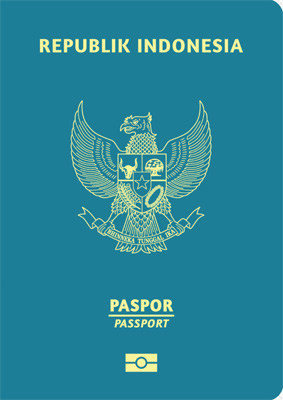
The Indonesian passport has a green cover displaying the national emblem, Garuda Pancasila, and the words “Republik Indonesia.”

Inside, the biographical data page contains essential details, including:

  • Full name
  • Passport number
  • Nationality
  • Date and place of birth
  • Gender
  • Date of issue and expiry

The passport is printed in both Indonesian and English. Interior pages feature illustrations inspired by Indonesia’s cultural heritage and natural landscapes.

Details such as religion or occupation are not included, preserving personal privacy.

Biometric and Security Features

Indonesia issues electronic passports (e-passports) that contain a secure embedded microchip. The chip stores:

  • A digital facial image
  • Personal identification details
  • Biometric data used for identity verification

These features help reduce fraud and support automated border systems used in many international airports.

To prevent forgery or tampering, Indonesian passports also include several protective elements, such as:

  • Laser-engraved personal information
  • Holographic overlays
  • Microtext and watermark printing
  • Ultraviolet (UV) security markings

Together, these features make the document difficult to replicate and internationally recognized.

Types of Indonesian Passports

Indonesia issues different types of passports depending on the holder’s status and travel purpose.

  • Ordinary Passport: This is the standard passport issued to citizens travelling for tourism, study, employment, business, or family visits.
  • Official Passport: Issued to government officials travelling abroad for official state assignments.
  • Diplomatic Passport: Issued to diplomats and senior state representatives travelling on diplomatic missions. Holders receive privileges in accordance with international diplomatic conventions.
  • Emergency Travel Document: In urgent situations, temporary travel documents may be issued to Indonesian citizens who need to travel immediately but do not have a valid passport.

Eligibility

Only Indonesian citizens are eligible for an Indonesian passport. Applicants must:

  • Hold valid Indonesian citizenship
  • Possess a national identity card (KTP) or approved identification
  • Not be subject to travel bans or court-imposed restrictions
  • Meet administrative requirements set by immigration authorities

Authorities may refuse issuance if legal conditions are not met.

Application Process

Applications can be submitted at:

  • Immigration offices within Indonesia
  • Official online immigration platforms (where available)
  • Indonesian embassies or consulates abroad

Passports may be requested for first-time issuance, renewal, replacement due to loss or damage, or correction of personal data.

Applicants are typically required to submit:

  • Valid national identity card (KTP)
  • Family registration card (Kartu Keluarga), where required
  • Birth certificate or proof of citizenship
  • Previous passport (if applicable)

Biometric data collection, including fingerprints and a digital photograph, must be completed in person.

Collection and Responsibilities

Once approved, the passport is issued according to official procedures. Applicants must present valid identification when collecting it.

Passport holders are responsible for safeguarding the document, reporting loss or theft immediately, and ensuring it is used only for lawful travel purposes. Misuse or falsification of an Indonesian passport can lead to administrative sanctions or criminal penalties under Indonesian law.

Conclusion

The Indonesian passport plays an important role in supporting international travel for Indonesian citizens. Issued by the Directorate General of Immigration and Indonesian missions abroad, it combines biometric technology with regulated procedures to ensure secure and reliable identification worldwide.

↑ Top